A Renewed Vision for Pastoral Visitation: A Historical Example, Pastoral Encouragement, and Edificat
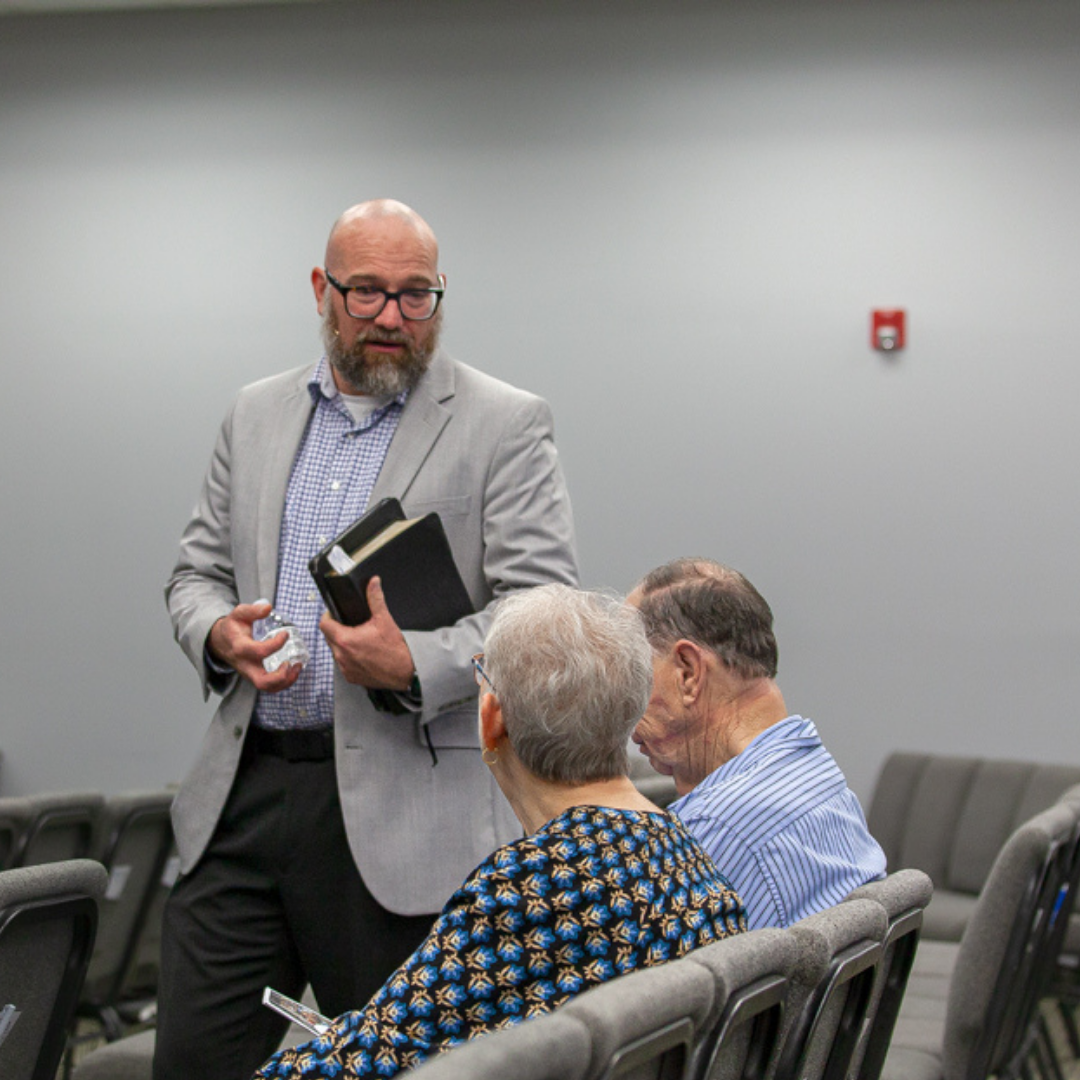
I went back to seminary to pursue a Master of Divinity degree in 2016. The overall experience was great and foundational for my life and ministry. I remember going to a conference at the seminary that year, and I cannot remember one thing I heard there. It was ten years ago! But I do remember one encounter I had.
I was staying at a deacon’s house for the conference to save money, and he was also housing another pastor. At breakfast one morning, the pastor and I were talking about his sister, who had recently undergone surgery. Something she said about her church struck me.
She attended a megachurch and told her brother, “My pastors don’t have time to come visit and pray with me in the hospital, so I didn’t even ask.”
He responded, “Well, then I am going to pray with you.”
And he did, right there on the phone.
I am not surprised that this kind of ministry has fallen out of vogue. Ministry is incredibly busy in our twenty-first-century way of living. And, to be honest, hospital or home visitation may not always seem like particularly fruitful ministry. Part of the problem may be that we misunderstand what pastoral visitation is. If the purpose is merely to cheer up the sick or shoot the breeze at someone’s house, then we have missed the point.
That is not what I mean by pastoral visitation.
Pastor, we all lament how weak the body of Christ is in America. We lament that many people in our churches are not growing distinctly in godliness. Some of that may simply reflect the pressures of the age in which we live, but some of it may also reflect negligence on our part.
Why are people in our churches not growing as they ought? Surely one reason is that the Word of God is not dwelling actively and vibrantly in their hearts. Hosea 4:6 says:
My people are destroyed for lack of knowledge; because you have rejected knowledge, I reject you from being a priest to me. And since you have forgotten the law of your God, I also will forget your children.
I want to make the case that pastoral visitation remains an excellent means of discipleship in our churches. I want to lay out a renewed vision for it by considering a historical example, offering some encouragement and practical instruction to pastors, and then explaining how pastoral visitation can benefit church members.
1. A Historical Example of Pastoral Visitation
Richard Baxter is a mostly forgotten figure among Christians today, and he remains a controversial figure in the Reformed world because of some of his doctrinal views and his unresolved feud with the “Prince of Puritans,” John Owen.
Baxter was born in 1615 in Rowton, Shropshire, England. He was an only child and largely a self-educated pastor. He was also a Nonconformist, meaning he did not fit within the mold of the Church of England. This caused him many problems and ultimately led to his ejection from the church.
In 1641, Baxter was called to the city of Kidderminster to serve as pastor. Marcus Loane quotes Baxter describing the place:
“My mind was much to the place as soon as it was described to me, because it was a full congregation and most convenient temple... an ignorant, rude and reveling people for the greater part, who had need of preaching...”
Baxter was up to the challenge.
In the foreword to a reprint of Baxter’s classic book, The Reformed Pastor, J. I. Packer says that Baxter, as a pastor, was almost incomparable. Through Baxter’s tireless labors, the church became a congregation of more than 800 members—massive for the 1600s. Yet what was remarkable about Kidderminster was not merely its size, but its spiritual depth.
His pastoral accomplishments were remarkable. More than seventy-five years after Baxter left Kidderminster, George Whitefield observed that the community was still reaping the fruit of Baxter’s ministry. Marcus Loane writes in Makers of Puritan History:
“There was hardly one home in each street where God was worshipped when he first came, but there were some streets where there was scarcely a house where God was not worshipped before he left.”
How did that happen?
Two things seem especially important: Baxter’s preaching and his pastoral visitation.
Baxter famously said, “I preach as a dying man to dying men.” Perhaps some of that urgency was shaped by his experience during the English Civil War, when gunshots could reportedly be heard in the distance during the early years of his ministry in Kidderminster.
Loane writes:
“As a preacher, Baxter’s great strength lay in his power to convince of sin: there was an edge to his language which cut through all pretense.”
Certainly, we need that same gospel urgency today. We must lay bare the hearts of our hearers so that the law might expose sin and point them to Christ.
But Baxter did not believe that preaching publicly was the entirety of pastoral ministry.
For his pastoral visitation, Baxter took Acts 20:20 as a mandate. Paul says:
I did not shrink from declaring to you anything that was profitable, and teaching you in public and from house to house.
I have read—though I need to relocate the source—that Baxter and his associate pastor sought to visit the members of their congregation twice a year. Considering the size of the church, that is astounding. We struggle to accomplish that even with cars! At some point, it becomes a matter of priority.
In The Reformed Pastor, Baxter lays out several concerns that should be addressed in these visits.
First, he wanted to understand the general orderliness and spiritual condition of the family. Second, he wanted to know whether the head of the household was praying and reading Scripture with the family. Third, he wanted pastors to address prayerlessness and teach people how to pray rather than merely giving them forms of prayer. Fourth, he wanted families to have access to good Christian books in addition to the Bible and to spend profitable time reading on the Lord’s Day. Fifth, he wanted fathers to understand how to observe the Lord’s Day and use catechesis in the home.
The exact questions may look different today, but Baxter's purpose is worth recovering: the pastor was to know the spiritual condition of the people entrusted to his care and intentionally help them grow.
2. A Renewed Vision for Pastors
This is where Baxter’s example presses on me personally.
The thought captivated me when I read that, decades after Baxter left Kidderminster, people were still reaping the fruit of his pastoral labors.
Pastor, do you want that?
I certainly do.
I think pastors and elder teams should develop their own questions for pastoral visits. The questions will naturally become deeper and more helpful as relationships grow stronger. But I think we should ask nothing less than questions like these:
-
How are you doing spiritually?
-
Are you able to engage with the sermons at church and apply them to your life?
-
Are there difficulties in your life right now that I can pray about—family, health, or spiritual difficulties?
-
How is your personal devotional life? How are prayer and Bible reading going?
-
Are you comfortable praying with your children? If not, can I help you learn how?
-
Are your children asking questions about what it means to be a Christian or expressing interest in baptism or the Lord’s Supper?
-
Is there a sin you are struggling with for which you especially need God’s help right now?
-
If you are married, are there recurring disagreements or difficulties in your marriage that we should talk about?
-
If you are single, how are you dealing with the challenges of singleness and loneliness?
-
Are you practicing family worship? If not, can I help you begin?
-
Is anything troubling you in your relationship with the church—a situation, another member, a leader, or a theological question?
These questions are not meant to be an interrogation. They are starting points for shepherding.
One answer may lead to another question. A struggle may lead to prayer. A theological question may lead to teaching. A weakness may lead to recommending a useful book or resource. A family may simply need encouragement that they are doing better than they realize.
Not everyone is going to like this. Baxter understood that too. Pastoral ministry sometimes requires entering areas people would rather leave untouched.
But if pastors are called to shepherd souls, then we must know something about the condition of the sheep.
At Flat Run, we plan to begin very simply. We will work alphabetically through the last names of the people in the church and seek to meet with approximately one family each week. If a weekday meeting does not work for a family, I will make myself available to meet in my office at church on Sunday.
I also have a family and responsibilities at home, so realistically I am limiting myself to one evening out each week. The goal is not to build an impossible pastoral program. The goal is to make personal shepherding a regular priority in the life of the church.
3. Pastoral Visitation for the Edification of Church Members
Church member, I want to speak directly to you for a moment.
I understand how daunting it may feel to open up your life and become vulnerable with another person, even a pastor you know and trust.
But perhaps there is another way to think about it.
A pastoral visit can be something like a wellness check at the doctor.
When you go for a wellness visit, your doctor assesses your health. A trained physician may recognize something you have overlooked. He may reassure you that something is healthy, identify something that needs attention, or recommend a change before a small problem becomes a larger one.
Pastors are called to watch over souls and guard the flock. As doctors are physicians of the body, pastors have sometimes been described as physicians of the soul.
Loane says of Baxter:
“Christians, he urged, should regularly come to their pastor with their problems, and let him check their spiritual health, and ministers should regularly catechize their entire congregations.”
Christian friend, you need a pastor.
And by that I do not merely mean a preacher you watch on a screen or see on a stage.
This is not a criticism of big churches. Praise God for large churches and for the extraordinary gifts he gives some men. But even in a big church, Christians need pastors—not merely preachers they listen to each Sunday. You need a pastor who knows your name, knows something about your life and your children, and wants to help you grow spiritually.
Enough with all this internet stuff! Make the Local Church Great Again!
There is another side to this, however.
Why are we willing to go to a doctor when something is wrong physically but sometimes become angry when a pastor identifies something wrong spiritually?
Baxter warned pastors:
“We must look that many of them will requite us with scorn and hatred, and contempt and account us their enemies, because we ‘tell the truth’.”
I hope and pray that will not describe us.
Do not enter a pastoral visit primarily with anxiety. Enter it with the encouragement that this may be an opportunity for you to grow in Jesus Christ.
Some of the greatest seasons of growth in my own life have come when people told me things I was not expecting, told me things I did not particularly want to hear, or encouraged me when I was discouraged. Different relationships and different settings allow for different kinds of conversations, and pastoral visitation creates room for conversations that may never happen on Sunday morning.
Will pastoral visitation by itself transform a church? Of course not.
I think small groups are a wonderful way to foster accountability, community, and spiritual vitality. Our church has them, and I am thankful for them. We should keep our home groups.
But I do not believe home groups eliminate the need for personal pastoral care.
I think we need both.
Why?
For the growth of God's people in grace. For the spiritual health of marriages and families. For children to grow up knowing Christ. For struggling Christians to receive encouragement and wandering Christians to receive correction.
And most of all, so that Christ would receive the glory due his name.
My prayer is that when you and I are dead and gone, Flat Run member, the name of Jesus Christ will still be praised in the Locust Grove community through this church.
I pray that our children will praise him.
I pray that our grandchildren will praise him.
I pray that people we do not even know today will one day come to Christ because Jesus Christ was treasured, proclaimed, and glorified in this church.
Pastoral visitation is not the whole answer.
But I believe it can be one faithful piece of that work.
God help us.
Soli Deo Gloria
More in Blog
September 23, 2026
The Discipline of the Tongue: EvangelismSeptember 23, 2026
The Discipline of the Tongue: What to Say and What Not to SaySeptember 11, 2026
Spiritual Disciplines: the Relationship Between the Holy Spirit, Discipline and our Sanctification